
Game Theory Meets MPC: Advances in Multi-Agent Control
Organizers: Sophie Hall (co-chair), Negar Mehr (co-chair), Saverio Bolognani, Florian Dörfler
Abstract
Model Predictive Control is one of the most advanced control techniques which can handle general objectives, state and input constraints, dynamics and optimizes an infinite horizon closed-loop cost. However, ever more control problems deal with multi-agent systems in which agents do not share a common objective. Game theory is a powerful tool for modelling conflict and cooperation between self-interested decision makers. Oftentimes strategic agents act in unknown environments and need to learn how to interact with the environment and with other agents. Various combinations of MPC, Game Theory and Reinforcement Learning have emerged in recent years. For instance, game-theoretic MPC is an emerging control methodology for multi-agent systems that generates control actions by solving a dynamic game with coupling constraints in a receding-horizon fashion. Accessible to participants from any background and seniority level, this workshop will provide an overview of recent research results at the intersection of MPC, Game Theory and Reinforcement Learning relevant for multi-agent control.
Registration
You can register for the workshop along with your registration for CDC.
Schedule
| Time | Speaker | Talk |
|---|---|---|
| 8:30-8:40 | Sophie Hall | Introduction |
| 8:40-9:20 | Prof. Frank Allgöwer | Robust data-driven MPC as a Min-Max game |
| 9:20-10:00 | Prof. Tamar Başar | Reinforcement Learning for Equilibria of Stochastic Dynamic Games with Finite and Infinite Populations |
| Coffee Break | ||
| 10:30-11:20 | Prof. Alberto Bemporad | Learning-based methods for competitive multi-agent decision-making and game-theoretic model predictive control |
| 11:20-11:50 | Prof. Lacra Pavel | On the Generalized Nash equilibrium problem and its extensions |
| 11:50-12:30 | Panel Discussion | Real-World Implementation: Computational and Practical Challenges (Prof. Allgöwer, Prof. Basar, Prof. Bemporad, Prof. Paccagnan) |
| Lunch Break | ||
| 14:00-14:40 | Prof. Dario Paccagnan | Strategically Robust Game Theory via Optimal Transport |
| 14:40-14:55 | Sophie Hall | Receding Horizon Games for Dynamic Resource Allocation Problems |
| 14:55-15:10 | Giulio Salizzoni | On the terminal costs in LQ games and the application to receding horizon games |
| 15:10-15:30 | Prof. Bryce Ferguson | Misspecification in Games as Models The Game-to-Real Gap and Game Theoretic MPC |
| Coffee Break | ||
| 16:00-16:15 | Emilio Benenati | Linear-Quadratic Dynamic Games as Receding-Horizon Variational Inequalities |
| 16:15-16:30 | Yizhou Zhang | Convergent Q-Learning for Infinite-Horizon General-Sum Markov Games through Behavioral Economics |
| 16:30-16:40 | Sophie Hall | Closing Remarks |
Speakers
Prof. Frank Allgöwer (University of Stuttgart)

Frank Allgöwer studied engineering cybernetics and applied mathematics in Stuttgart and with the University of California, Los Angeles (UCLA), CA, USA, respectively, and received the Ph.D. degree from the University of Stuttgart, Stuttgart, Germany. Since 1999, he has been the Director of the Institute for Systems Theory and Automatic Control and a professor with the University of Stuttgart. His research interests include predictive control, data-based control, networked control, cooperative control, and nonlinear control with application to a wide range of fields including systems biology. Dr. AllgÅNower was the President of the International Federation of Automatic Control (IFAC) in 2017–2020 and the Vice President of the German Research Foundation DFG in 2012–2020.
Prof. Tamar Başar (UIUC)

Tamer Başar received his B.S.E.E. degree from Robert College, Istanbul, and his M.S., M.Phil., and Ph.D. degrees from Yale University. He has been with the University of Illinois at Urbana-Champaign since 1981, where he is currently Swanlund Endowed Chair Emeritus and Center for Advanced Study (CAS) Professor Emeritus of Electrical and Computer Engineering, with affiliations with the Coordinated Science Laboratory and the Information Trust Institute. At Illinois, he has served as Director of CAS (2014–2020), Interim Dean of Engineering (2018), and Interim Director of the Beckman Institute (2008–2010). His current research interests include stochastic teams, games, and networks; multiagent systems and learning; data-driven distributed optimization; epidemics modeling and control over networks; security and trust; energy systems; and cyber–physical systems. He has received several awards and recognitions, including the Bode Lecture Prize of the IEEE Control Systems Society (CSS), Quazza Medal of IFAC, Bellman Heritage Award of the American Automatic Control Council (AACC), Isaacs Award of the International Society of Dynamic Games (ISDG), the IEEE Control Systems (Field) Award, and numerous international honorary doctorates and professorships.
Prof. Alberto Bemporad (IMT Lucca)

Alberto Bemporad received his Master’s degree cum laude in Electrical Engineering in 1993 and his Ph.D. in Control Engineering in 1997 from the University of Florence, Italy. In 1997–1999 he held a postdoctoral position at the Automatic Control Laboratory, ETH Zurich, Switzerland, where he collaborated as a Senior Researcher until 2002. Between 1999 and 2011 he held faculty appointments first at the UNiversity of Seina and then at the University of Trento, Italy. Since 2011 he has been a Full Professor at the IMT School for Advanced Studies Lucca, Italy, where he served as the Director of the institute in 2012–2015. He has published more than 400 papers in the areas of model predictive control, hybrid systems, optimization, automotive control, and is the co-inventor of 21 patents. He was an Associate Editor of the IEEE Transactions on Automatic Control during 2001–2004 and Chair of the Technical Committee on Hybrid Systems of the IEEE Control Systems Society in 2002–2010. He received the IFAC High-Impact Paper Award for the 2011–14 triennial, the IEEE CSS Transition to Practice Award in 2019, and the 2021 SAE Environmental Excellence in Transportation Award. He has been an IEEE Fellow since 2010.
Prof. Dario Paccagnan (Imperial College)
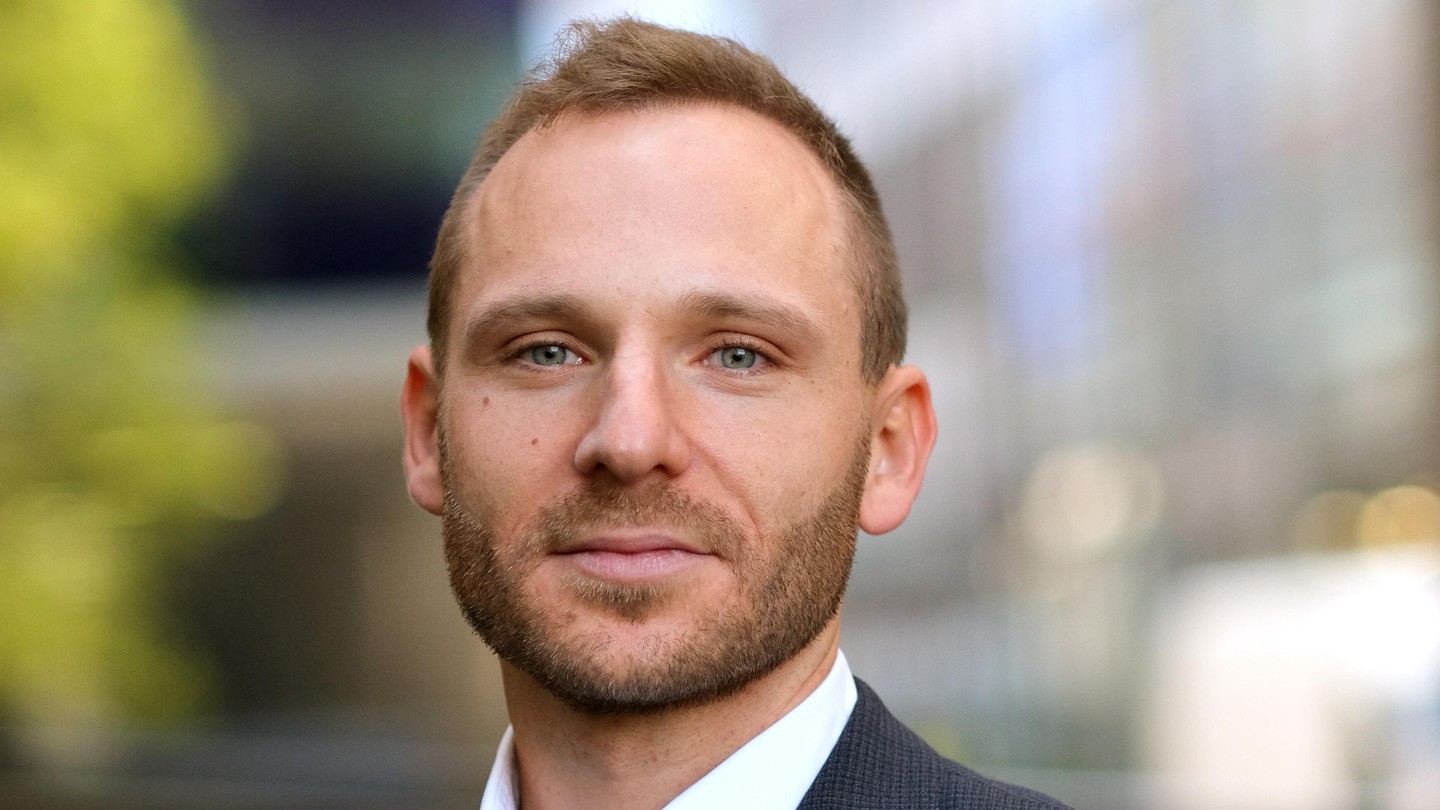
Dario Paccagnan is an Associate Professor at the Department of Computing, Imperial College London where he joined in the Fall 2020. Before that, he was a postdoctoral fellow at the University of California, Santa Barbara. He obtained his PhD from the Automatic Control Laboratory, ETH Zurich, Switzerland, in 2018. He received a B.Sc. and M.Sc. in Aerospace Engineering from the University of Padova, Italy, in 2011 and 2014, and a M.Sc. in Mathematical Modelling and Computation from the Technical University of Denmark in 2014; all with Honors. Dario's interests are at the interface of game theory, control theory, and learning theory with a focus on tackling societal-scale challenges. He was a finalist for the 2019 EECI best PhD thesis award and was recognized with the SNSF Early Postdoc Mobility Fellowship, the SNSF Doc Mobility Fellowship, and the ETH medal for his doctoral work. He is the recipient of the best student paper award (as advisor) at AISTAT 2025.
Prof. Lacra Pavel (University of Toronto)

Lacra Pavel received the Diploma of Engineering from the Technical University of Lasi, Lasi, Romania, and the Ph.D. degree in electrical engineering from Queen’s University, Kingston, Canada. After a postdoctoral stage at the National Research Council and four years of industry experience, in 2002 she joined the University of Toronto, Toronto, ON, Canada, where she is now a Professor in the Systems Control Group, Department of Electrical and Computer Engineering. She has authored the book Game Theory for Control of Optical Networks. Her research interests include game theory and distributed optimization in networks, with emphasis on dynamics and control. Dr. Pavel is a Senior Editor of IEEE Transactions on Control of Network Systems, a Senior Editor of the IEEE Open Journal of Control Systems and a Member of the Conference Editorial Board of the IEEE Control Systems Society; she acted as Publications Chair of the 45th IEEE Conference on Decision and Control.
Sophie Hall (ETH Zurich)

Sophie Hall is a PhD student at the Automatic Control Laboratory at ETH Zurich. She received the Bachelor’s degree in Mechanical Engineering from the University of Surrey, UK, and Nanyang Technological University, Singapore. She completed her Master’s degree at ETH Zurich in Biomedical Engineering focusing on modeling and control. She was a finalist for the IFAC NMPC 2024 Young Authors Award. Her research interests revolve around game theory, model predictive control and real-time optimization with applications in energy management, computing centers, and supply chains.
Giulio Salizzoni (EPFL)

Giulio Salizzoni is a PhD student in the Systems Control and Multiagent Optimization Research group at EPFL Lausanne, Switzerland. He received both his Bachelor’s Degree in Electronic engineering and his Master’s Degree in Automation and Control engineering from Politecnico di Milano. During the Master, he also attended the Alta Scuola Politecnica, a multidisciplinary honour program. In his master thesis, he studied the use of the scenario approach to shape the stationary state distribution of a linear system. Currently, he is interested in multiagent learning and optimization.
Prof. Bryce Ferguson (Dartmouth College)
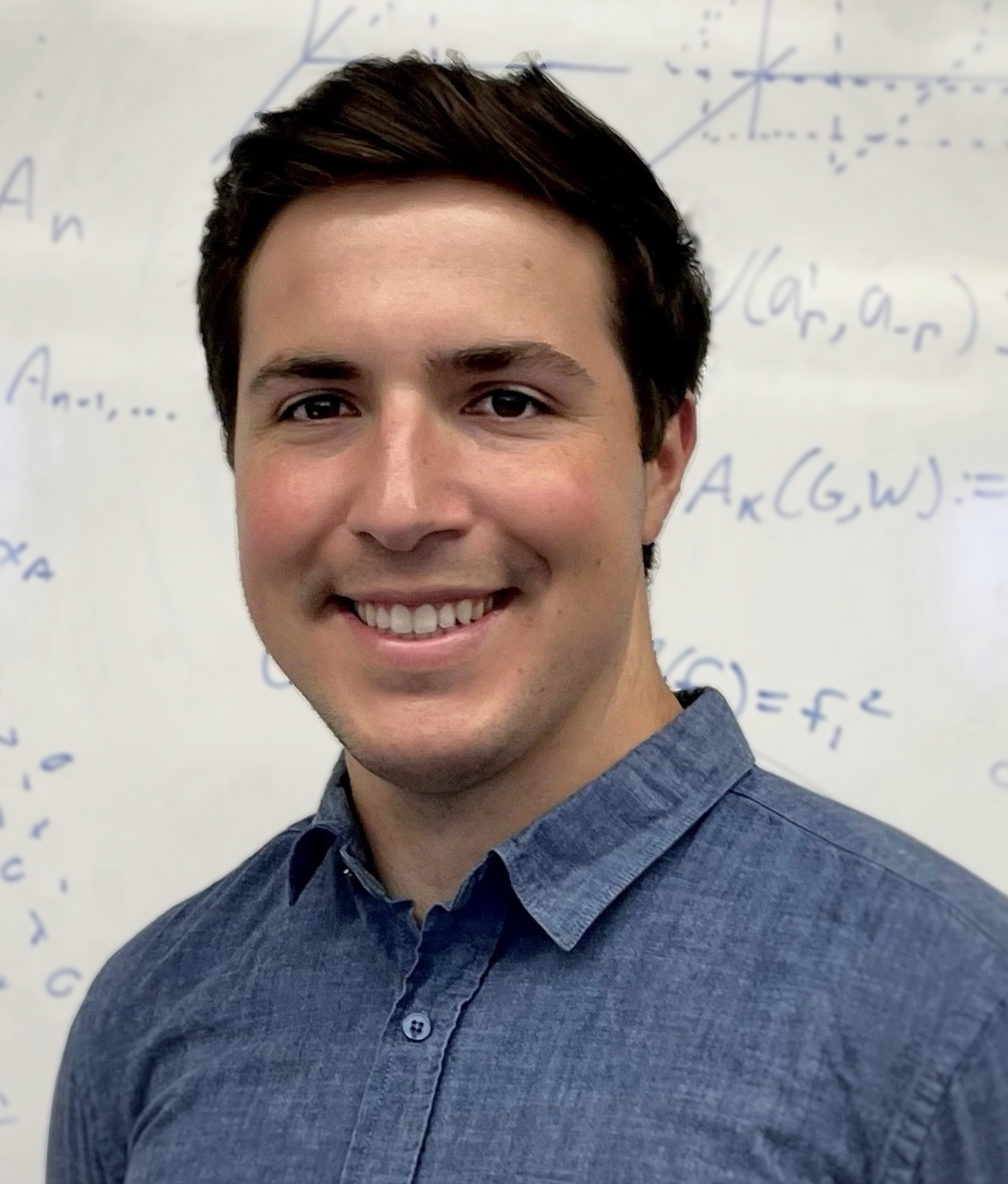
Bryce L. Ferguson is an Assistant Professor in the Thayer School of Engineering at Dartmouth College. Bryce obtained his BS, MS, and PhD in Electrical and Computer Engineering from the University of California, Santa Barbara in 2018, 2020, and 2024, respectively, and his AA in Mathematics from Santa Rosa Junior College in 2016. He also held Visiting Research positions at the University of Colorado, Colorado Springs, in 2019, and at the University of Grenoble, Alpes, in 2022. Prior to joining Dartmouth, Bryce was a postdoctoral researcher in the Department of Electrical Engineering & Computer Science at the University of California, Berkeley, and worked as a Senior Research Engineer with the Air Force Research Laboratory (AFRL) Aerospace Systems Directorate in 2024 and 2025.
Emilio Benenati (KTH)
Emilio Benenati is a Postdoc working at KTH. His research focus is on extending the possibilities offered by optimization to the control of multi-agent systems.
He currently focuses on non-cooperative (game-theoretic) MPC and on Nash equilibrium seeking algorithms. Before that, he participated in the ironCub project, the first flying jet-powered humanoid.
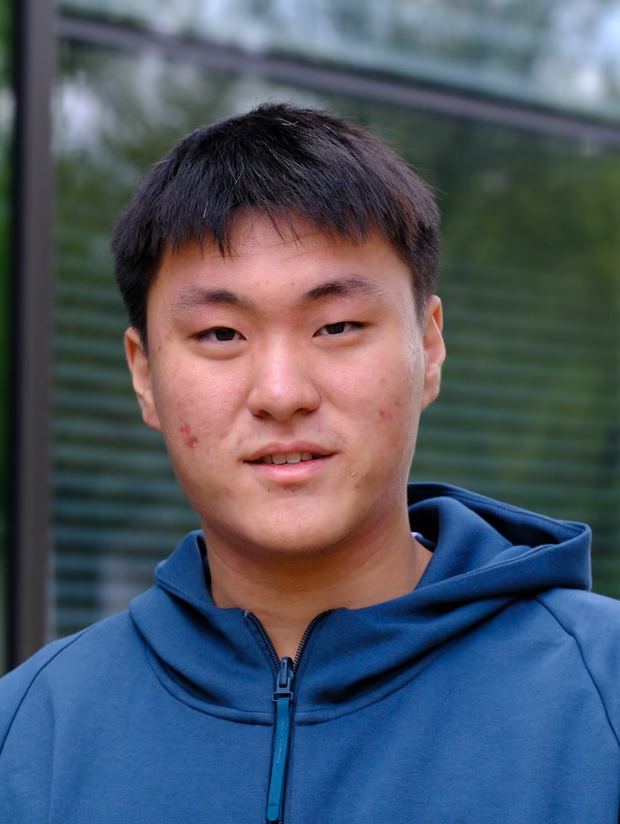
Yizhou Zhang (CalTech)
Materials
Workshop materials will be available to download here.
